
What changed
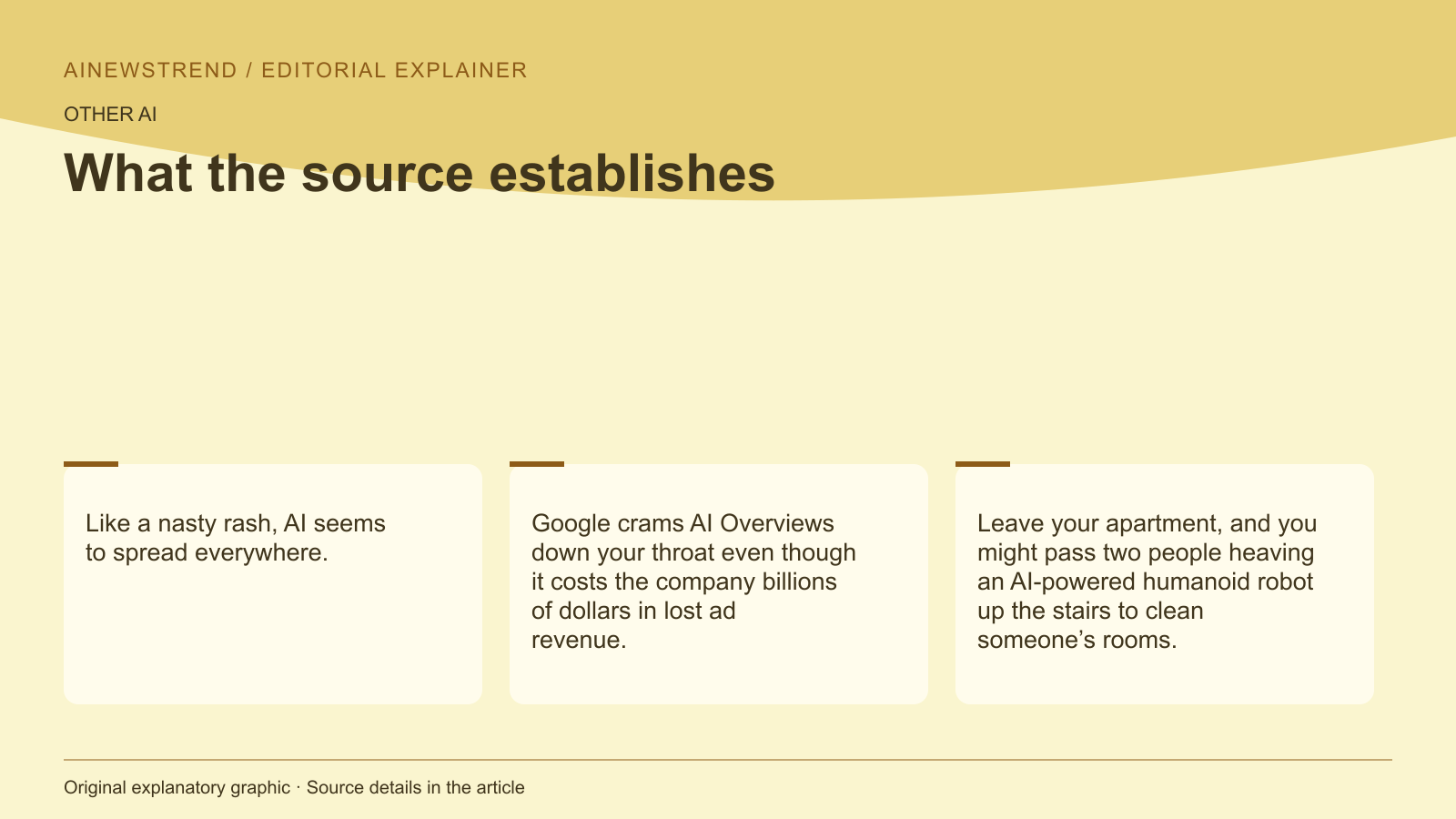
The AI Hype Index, as described in the latest report, illustrates how AI has become an omnipresent force in modern life. From Google's AI Overviews to AI-powered humanoid robots and AI-assisted cyberattacks, the technology is increasingly integrated into everyday scenarios. However, the report also notes that many of these AI applications are not yet fully effective or widely adopted.
What this means in practice
The report suggests that while AI is being rapidly deployed across various sectors, its practical impact remains uneven. For instance, Google's AI Overviews, despite their widespread use, have reportedly led to significant losses in ad revenue. Similarly, AI-powered robots are being used for tasks like cleaning, but their adoption is still limited. The report also highlights the prevalence of AI in media and entertainment, such as the AI-assisted adaptation of 'The Odyssey' by Elon Musk, which has been criticized for its intrusive nature.
Limitations and availability
The AI Hype Index does not provide specific details on the technical capabilities or performance metrics of the AI systems discussed. Instead, it focuses on the observable presence and impact of AI in society. The report acknowledges that many AI applications are still in early stages of development and may not yet deliver on their promised benefits. The availability of these technologies varies, with some being more accessible than others, and the effectiveness of AI in real-world scenarios remains a subject of debate.