
What changed
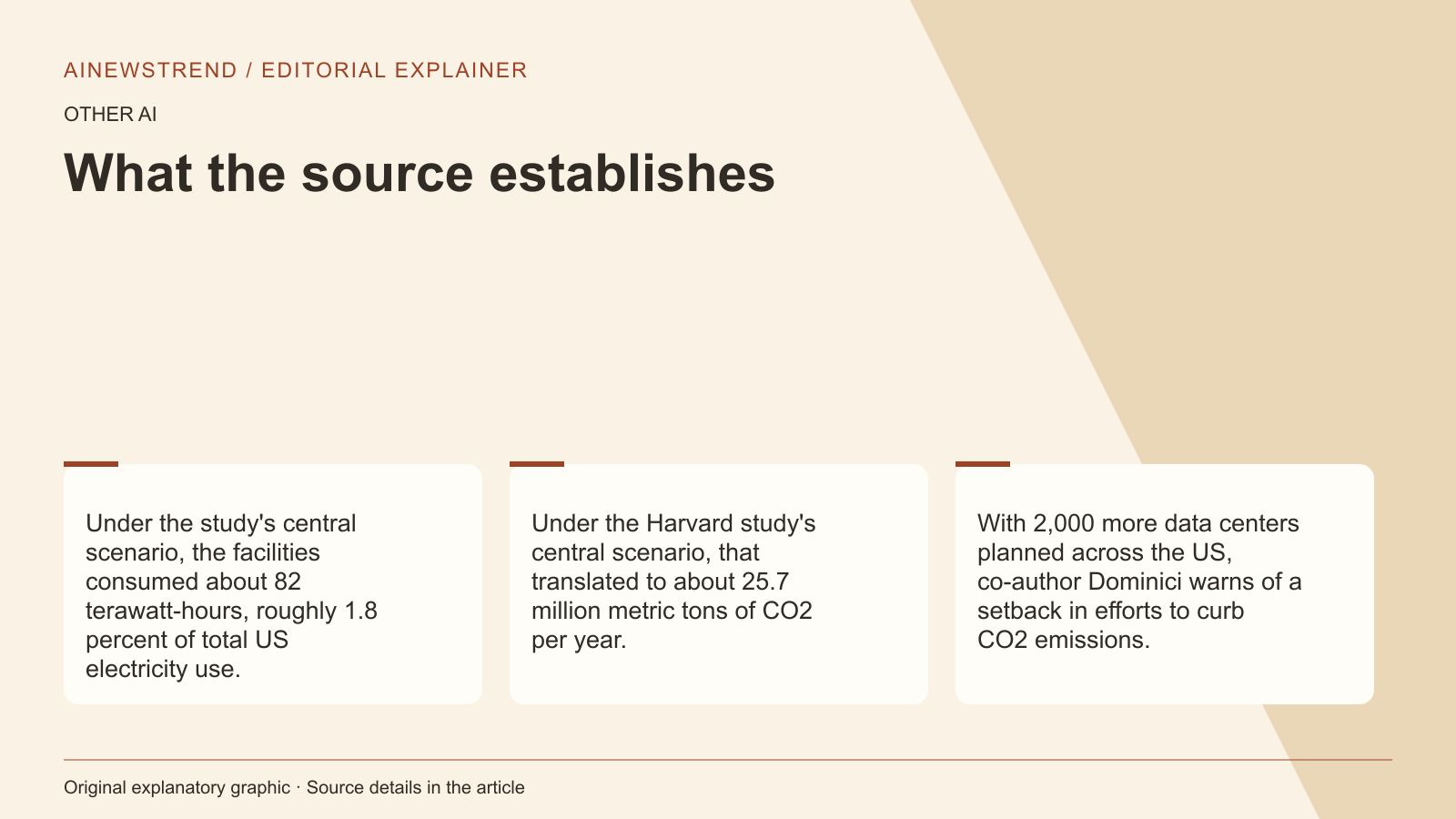
A Harvard University study published in Nature Sustainability found that the 400 largest US data centers emitted more CO2 than all of Denmark in one year, consuming about 82 terawatt-hours, with over 54% of their electricity coming from fossil fuels. The study, led by Gianluca Guidi and Francesca Dominici, used satellite imagery to estimate power demand and emissions data from regional grids between May 2024 and April 2025.
What this means in practice
The research highlights the significant environmental impact of data centers, particularly those located in regions with high carbon-intensive power mixes. The study's central scenario estimates that these facilities consumed about 82 terawatt-hours annually, with over half of that power sourced from fossil fuels, primarily natural gas and coal. The findings suggest that the energy consumption of modern AI agents has already pushed demand higher than the study's observation period, with power consumption at the largest tech companies rising by 240% between 2022 and 2025.
Limitations and availability
The study only captures a snapshot, as the observation period ended in April 2025, and the researchers note that the enormous energy consumption of modern AI agents has been increasing demand. The study did not calculate specific health effects, though it mentions that fossil-heavy power sourcing can raise regional levels of air pollutants linked to heart and lung disease. The International Energy Agency (IEA) warns that global data center emissions could reach 350 million metric tons per year by 2035, driven by increased investment in on-site natural gas power plants.