
What changed
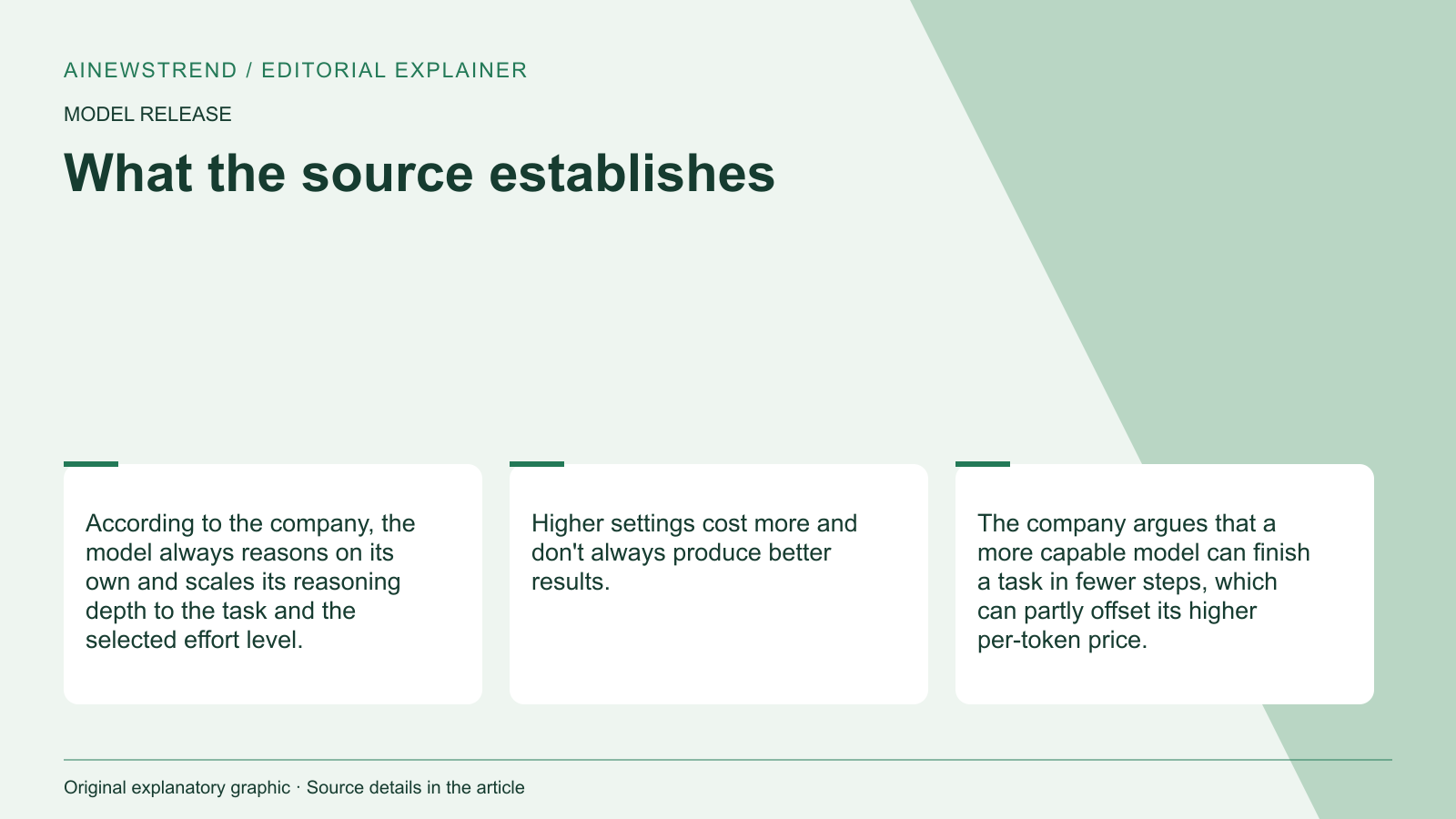
Anthropic has announced that users of Claude Opus 5.5 should update their prompting habits to improve performance. The model, now the default on Pro, Max, Ultra, and Team plans, operates differently from its predecessors and is affected by outdated instructions. Key changes include removing phrases like 'think hard' or 'think carefully' from prompts, as the model automatically reasons and scales its reasoning depth based on the task and effort level.
What this means in practice
Users are advised to start at the 'Medium' effort level, which matches the performance of the previous model at 'High' in internal tests. Anthropic suggests switching to 'High' only when 'Medium' is insufficient. Additionally, users should describe the desired end result in a single message, attach diagrams and tables as images or files, and name specific unwanted design styles rather than broadly banning generic design. Teams that previously used Sonnet for simpler tasks and reserved Opus for complex projects are encouraged to reconsider this approach, as Opus 5.5 can complete tasks in fewer steps, potentially offsetting its higher per-token cost.
Limitations and availability
The changes are available to users on Pro, Max, Ultra, and Team plans. Anthropic does not specify exact performance benchmarks or independent testing results, relying instead on internal tests. The model's ability to handle multi-part tasks and improve image reading accuracy is noted, but no concrete comparisons to other models are provided. Users are encouraged to adjust their prompting strategies to align with the model's capabilities, though the exact impact of these changes on all use cases remains unspecified.