
What changed
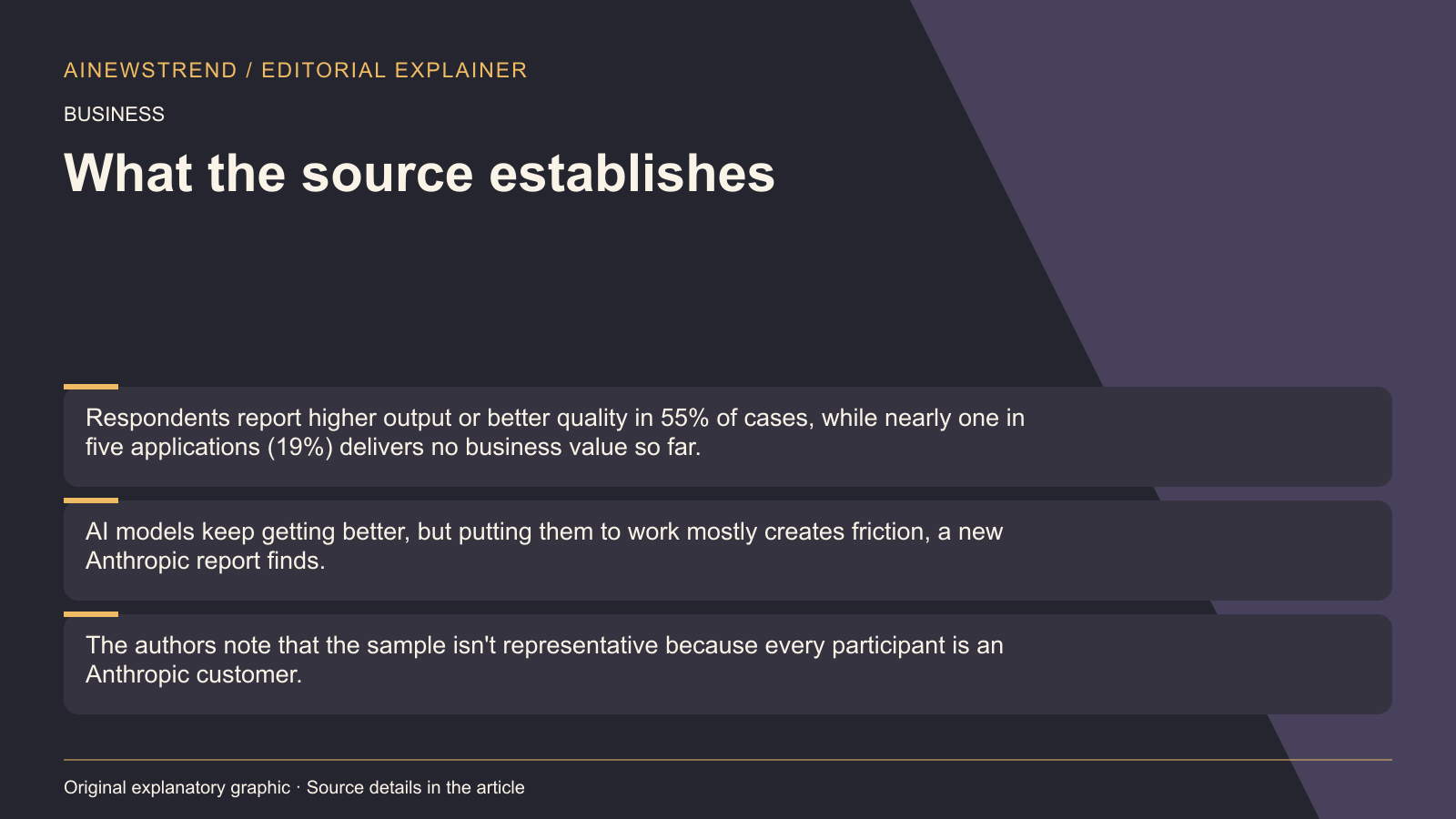
Anthropic's 'Working with AI' report, based on 66 interviews with 58 US companies, reveals that the hardest part of adopting AI at work is not learning the tools, but internal challenges like review bottlenecks and employee resistance. The study examined nearly 300 AI applications, with 55% of deployments reporting higher output or better quality, while 19% delivered no business value.
What this means in practice
The report identifies the most common obstacles as the volume of AI output requiring human review (49 mentions), employee resistance (43 mentions), and required expert reviews and testing (42 mentions). These issues create friction within organizations, with some AI implementations leading to delays or even project abandonment. For example, one company shut down an AI feature that translated product interface text into 10 languages because no staff could handle customer support in those languages. Additionally, AI-driven time savings often benefit individual workers rather than the organization, with some employees deliberately hiding gains to use the time for personal activities.
Limitations and availability
The study's sample is not representative, as all participants are Anthropic customers. The findings suggest that while AI can improve productivity, its real-world impact is limited by internal organizational challenges. The report also notes that many AI deployments fail due to outdated custom tools, security risks, and a lack of stable technical infrastructure. Companies that achieve higher value from AI often implement larger organizational changes, indicating that AI adoption requires more than just tool deployment.