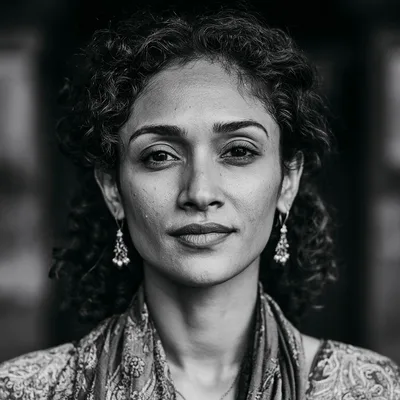

Petra Ferraz de Novaes, a 36-year-old software engineer from Brazil, uses AI to craft fantasy stories, often spending hours at a time building narratives with the help of SillyTavern.
She sketches out concepts like an elven warrior battling the queen of the Amazons and watches the AI fill in the gaps.
Novaes enjoys the unpredictability of the AI’s interpretations, which often take the narrative in unexpected directions. “What fascinates me is the unpredictability,” Novaes tells WIRED. “People say that AI hallucinates a lot. But in this case, it’s probably what you want.”
Novaes switches between multiple fantasy worlds during a single session, drawing from her own ideas and popular franchises like Star Wars, Pokémon, and Mass Effect.
She sometimes creates self-contained stories the length of a small novel, which she shares online, or participates in private role-plays. “It can be never-ending.
You find a quest, you complete it, you go for the next one,” says Novaes. “The limit is your imagination.”
According to a recent study, many people share Novaes’ interest in AI-generated fiction.
Melanie Walsh, an assistant professor at the University of Washington Information School and coauthor of the study, says that readers don’t mind that the stories are produced by an AI model. “They know [the stories are] produced by an AI model, and they don’t care,” says Walsh. “In fact, that seems to be a big part of the attraction.”
The study analyzed more than 500,000 prompts fed into ChatGPT from the WildChat dataset, finding that over a third of interactions involved some form of fiction generation.
The majority of these prompts came from a small group of “power users” who generate and tweak stories obsessively. One user, for example, prompted ChatGPT to generate versions of the same fan-fiction narrative thousands of times over several months.
Still, the researchers estimate that 7 percent of chatbot users engage in fiction generation.
The WildChat dataset has limitations, including anonymized prompts and a lack of demographic data.
OpenAI noted that “WildChat is not a representative sample of all ChatGPT users.” A 2025 study by OpenAI and the National Bureau of Economic Research found that only 1.4 percent of ChatGPT prompts were fiction-related, far lower than the researchers’ estimate.
Nonetheless, the study highlights a committed subsection of readers who generate custom, personal fiction.
For some, like Razrien, a 40-year-old man from Indiana, AI offers a way to explore hyper-specific personal fantasies.
He uses AI to create characters like a “big angry rat wife” and an “eight-foot tall werewolf mommy with a bad temper.” He has found that models like Google’s Gemma 4 are particularly effective for his interests. “I like my big rat wife.
I love her to pieces. Even if she sometimes breaks me apart and heals me back together. But hey, that’s how she says she loves you,” says Razrien.
Source: wired


