
What changed
Hugging Face's Gemma 4 model is now being used in an app called DJemma, which lets users create music through head movements.
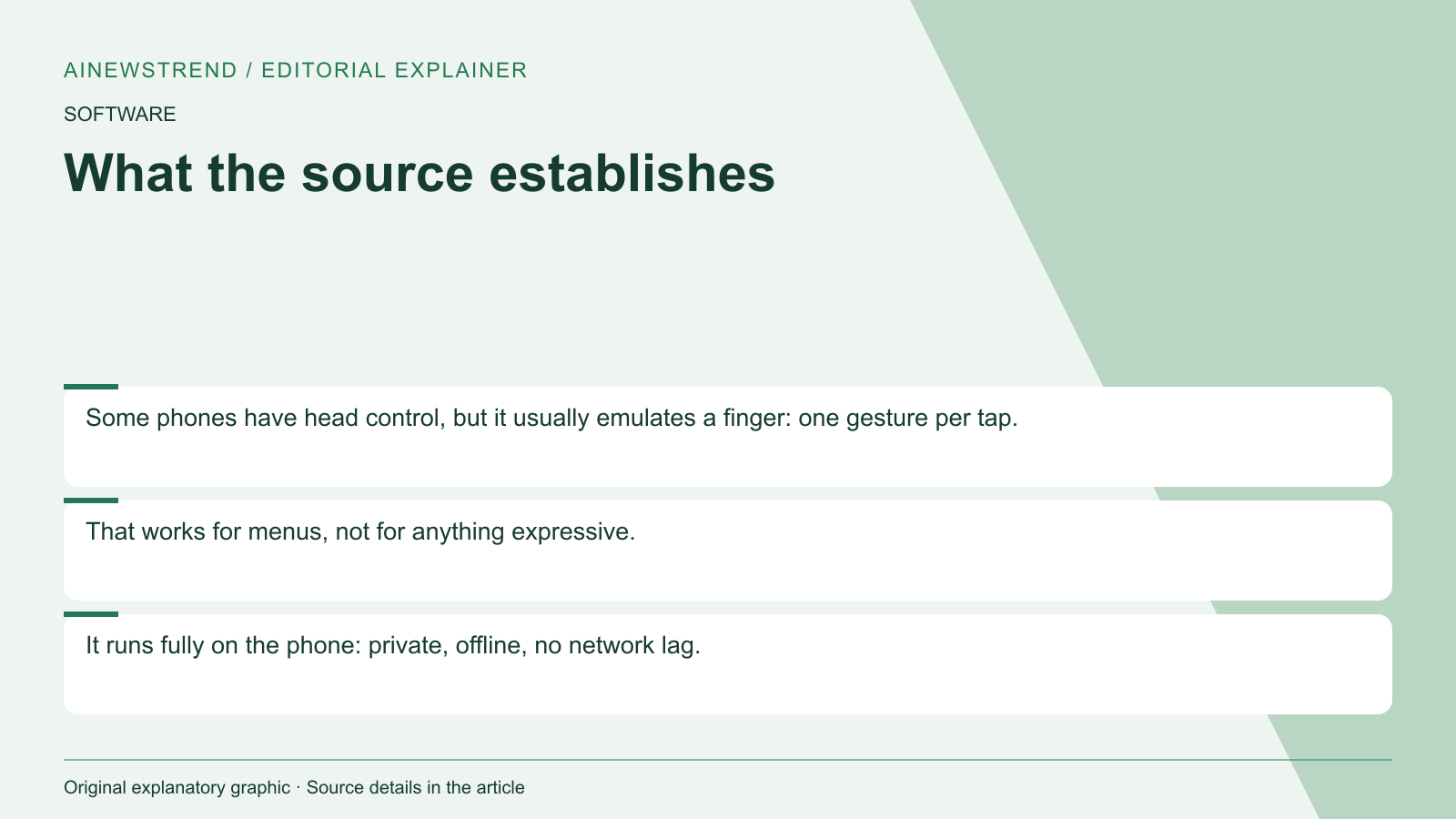
The app, developed by Dima Dobrynin and the Staxel AI team, uses head control to select notes, adjust tempo, and generate music. Gemma 4 runs fully on the device, offline, and without requiring internet access.
The app is designed for individuals who cannot use traditional touch or voice inputs, such as those with cerebral palsy.
What this means in practice
DJemma translates head gestures into musical commands. Users can play melodies by turning their heads to select notes and opening their mouths to play them.
The app also allows users to adjust tempo by widening or narrowing their eyes and to create custom mixes based on photos or text prompts. Gemma 4's vision capabilities turn photos into matching mixes, and the app supports head-typing for text input.
The app was tested on a mid-range Samsung Galaxy S26 FE phone, demonstrating its accessibility on common devices.
Limitations and availability
The app uses Google's LiteRT-LM stack, combining MediaPipe for face tracking with Gemma 4 for processing. It does not require internet permissions and was demonstrated in airplane mode. The model runs on-device, with a fixed vocabulary of commands to ensure reliability.
The app is currently in development and is being integrated into Staxel AI's touchless interfaces. The team plans to expand the app's capabilities to include head tracking, Gemma 4-powered word prediction, and an Android version.
The supplied announcement does not specify release dates or availability beyond the hackathon demonstration.