
What changed
OpenAI has introduced the Codex sandbox, a feature within its agentic harness, Codex, that enables users to run commands on their machines while imposing customizable filesystem and network limits. This sandbox is designed to provide additional protections by restricting what commands can access, thereby enhancing security.
What this means in practice
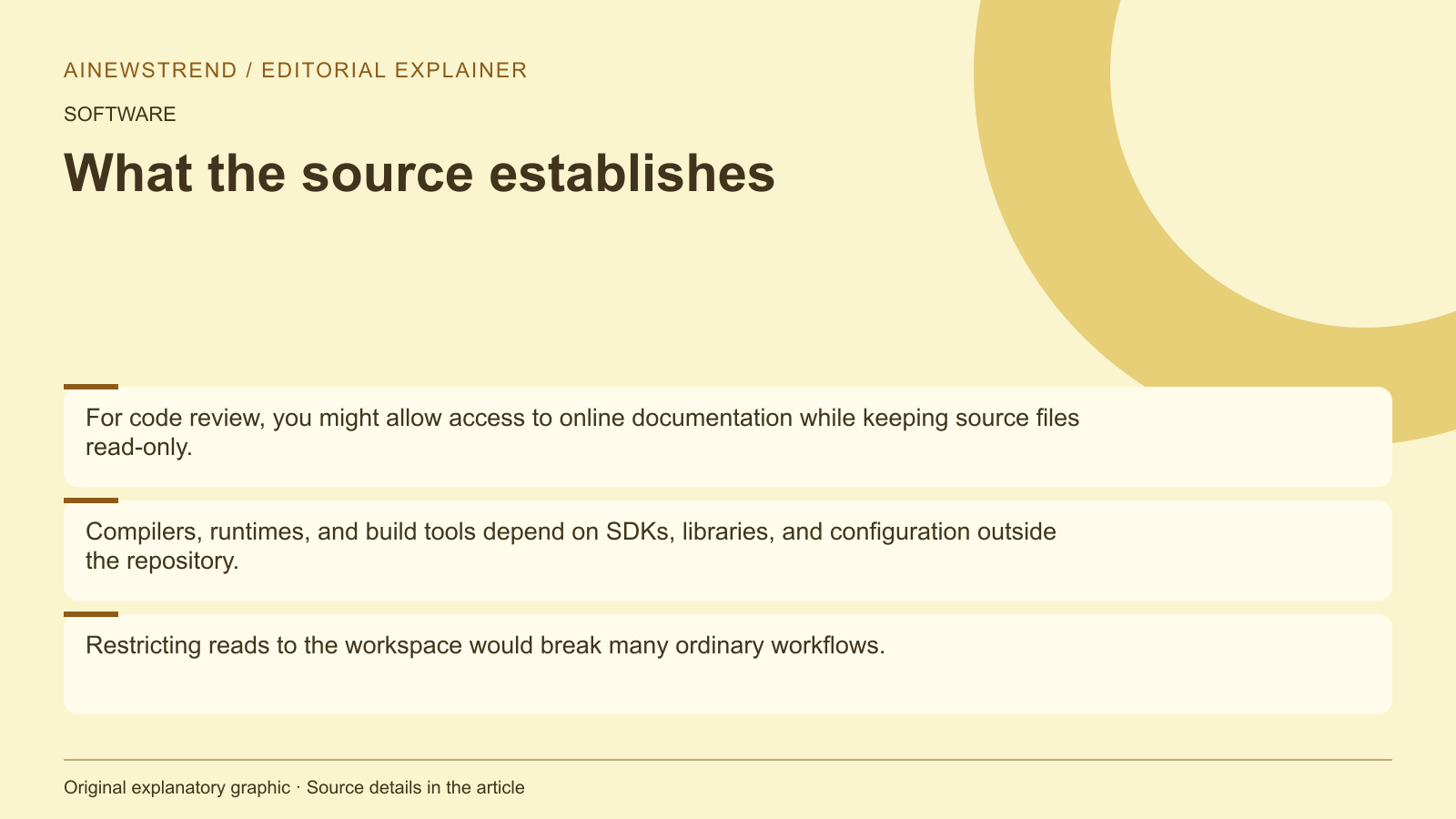
The Codex sandbox allows users to configure permission profiles that define the filesystem and network restrictions for a Codex session. For example, users can allow Codex to read and modify files in specific directories while blocking network access to prevent uploads. This is particularly useful for tasks like photo organization or code review, where access to online documentation might be allowed while keeping source files read-only.
Limitations and availability
The sandbox's restrictions prevent a large class of potentially harmful behaviors, but they do not eliminate all risks. For instance, an agent could inject malicious code into a locally installed package, which might not be detected by Git. The sandbox limits what commands can access, while training and alignment help the model use that access in accordance with the user's intent. The Codex sandbox is available on macOS, Linux, and Windows, with the harness exposing OS-specific sandboxing mechanisms through a common API.