
What changed
On November 16, 2026, OpenAI announced it has signed agreements with four independent assessors—Apollo Research, METR, Transluce, and Goodfire—for its first phase of embedded assessments. These assessments will provide independent experts with deep access to internal models and systems to evaluate model alignment and the effectiveness of safeguards.
What this means in practice
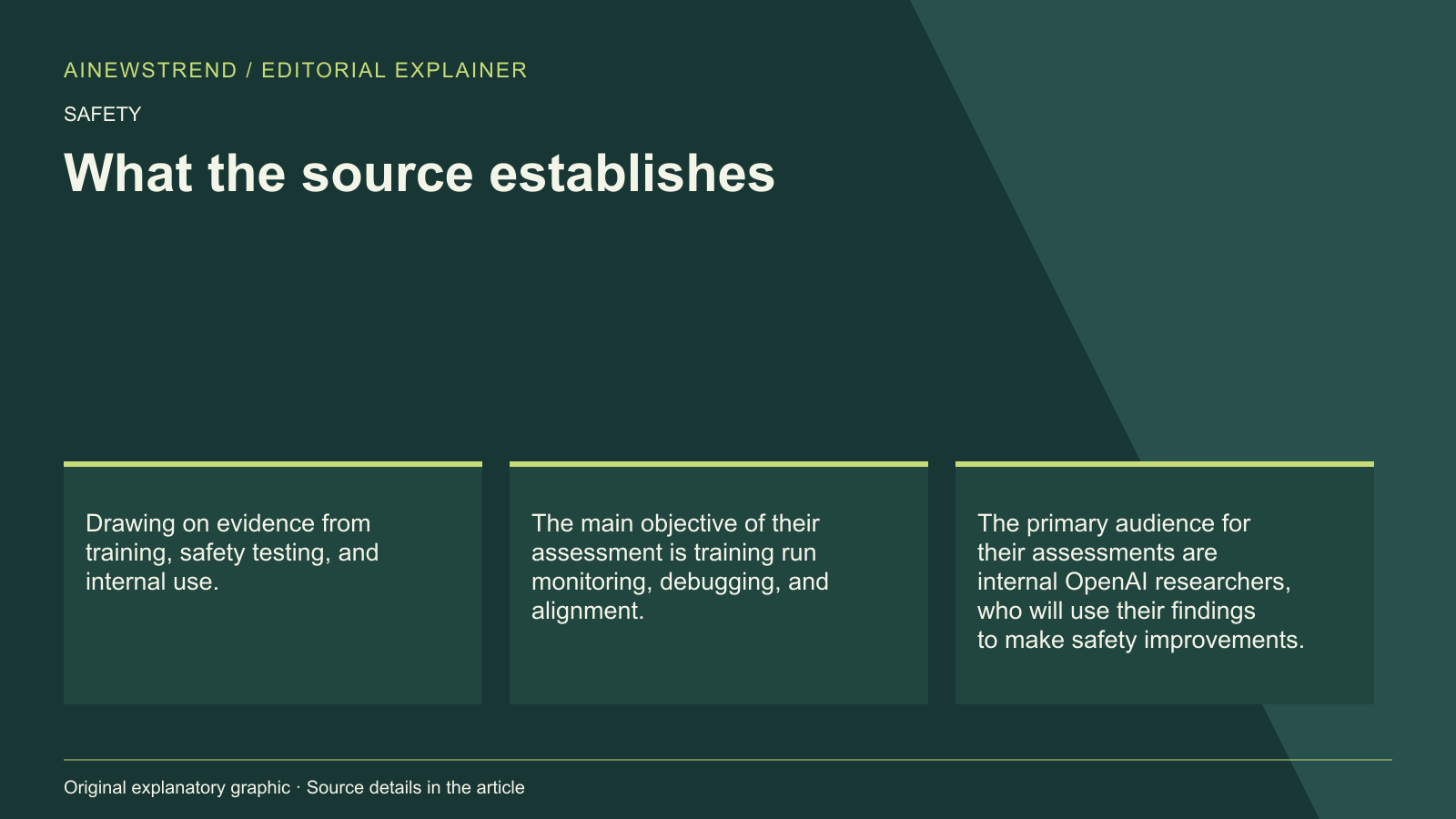
The assessments focus on alignment and safeguards for models during training and internal use, complementing OpenAI's safety cases. Assessors will receive access to internal resources such as model checkpoints, source code, training and evaluation data, monitoring systems, technical documentation, and discussions with researchers and engineers. This access allows them to conduct independent evaluations and uncover potential failures.
Apollo Research will assess whether models could covertly work against developers' intentions and whether safeguards detect such behavior. Goodfire will analyze model internals using its platform, with findings shared with internal researchers.
METR will conduct two assessments, focusing on alignment and monitoring, including a large reinforcement learning run. Transluce will evaluate post-training alignment assessments and plan a follow-on assessment in early 2027.
Limitations and availability
OpenAI has developed protocols to balance deep access with security, confidentiality, and oversight. Assessors working with sensitive information will be provided OpenAI devices and work on-site at OpenAI offices. The assessments are part of OpenAI's commitments under the White House Accord on Super Intelligence. The supplied announcement does not specify the exact timeline for full implementation or availability of all assessment features.