
What changed
Scientists at AI2 have outlined key trust requirements for AI agents used in research, emphasizing the need for validation, privacy, objectivity, accountability, and transparency. These requirements reflect concerns beyond just the accuracy of AI-generated results, including how answers are reached, protection of sensitive information, recognition of bias, and who is responsible for verifying findings.
What this means in practice
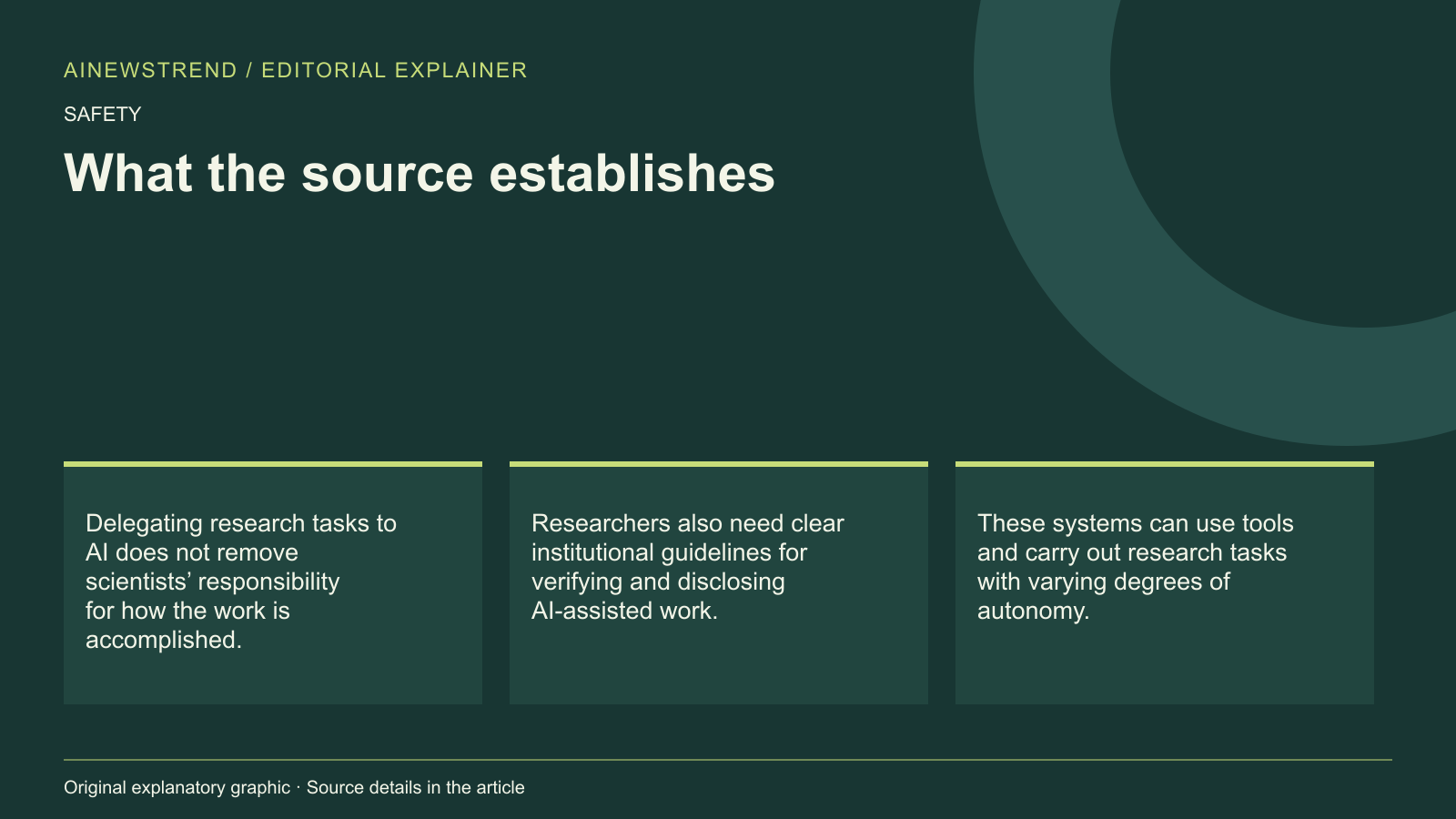
Researchers using AI agents for tasks such as literature review, data analysis, or lab automation must ensure that the systems they employ adhere to scientific standards. This includes verifying that AI systems respect physical safety constraints, protect participant privacy, and do not access unauthorized data. Scientists also need clear institutional guidelines for disclosing and verifying AI-assisted work.
The interviews conducted by AI2 highlighted that trust in AI agents depends on five dimensions: validation, privacy, objectivity, accountability, and transparency. Researchers need to understand how an answer was reached, protect sensitive information, recognize bias, and determine who is responsible for verifying AI-assisted findings. These are matters of responsible conduct in research.
Limitations and availability
The findings are based on interviews with 17 scientists across various fields and do not specify exact implementation details or timelines for applying these trust requirements.
The proposed benchmarks and evaluations for AI agents remain proposals to develop and test with scientists, rather than established solutions.
The article does not specify how these requirements will be integrated into existing workflows or what specific tools will be developed to meet these standards.
The supplied announcement does not specify how these trust requirements will be implemented in practice or what specific tools will be developed to meet these standards.