
What changed
Security researchers at Dragos exposed major security flaws in AI services by sending roughly two million test requests containing fake credentials. The researchers identified at least three compromised providers where attackers were actively stealing user data, including hundreds of AWS keys. None of the three knew they had been compromised until Dragos notified them.
What this means in practice
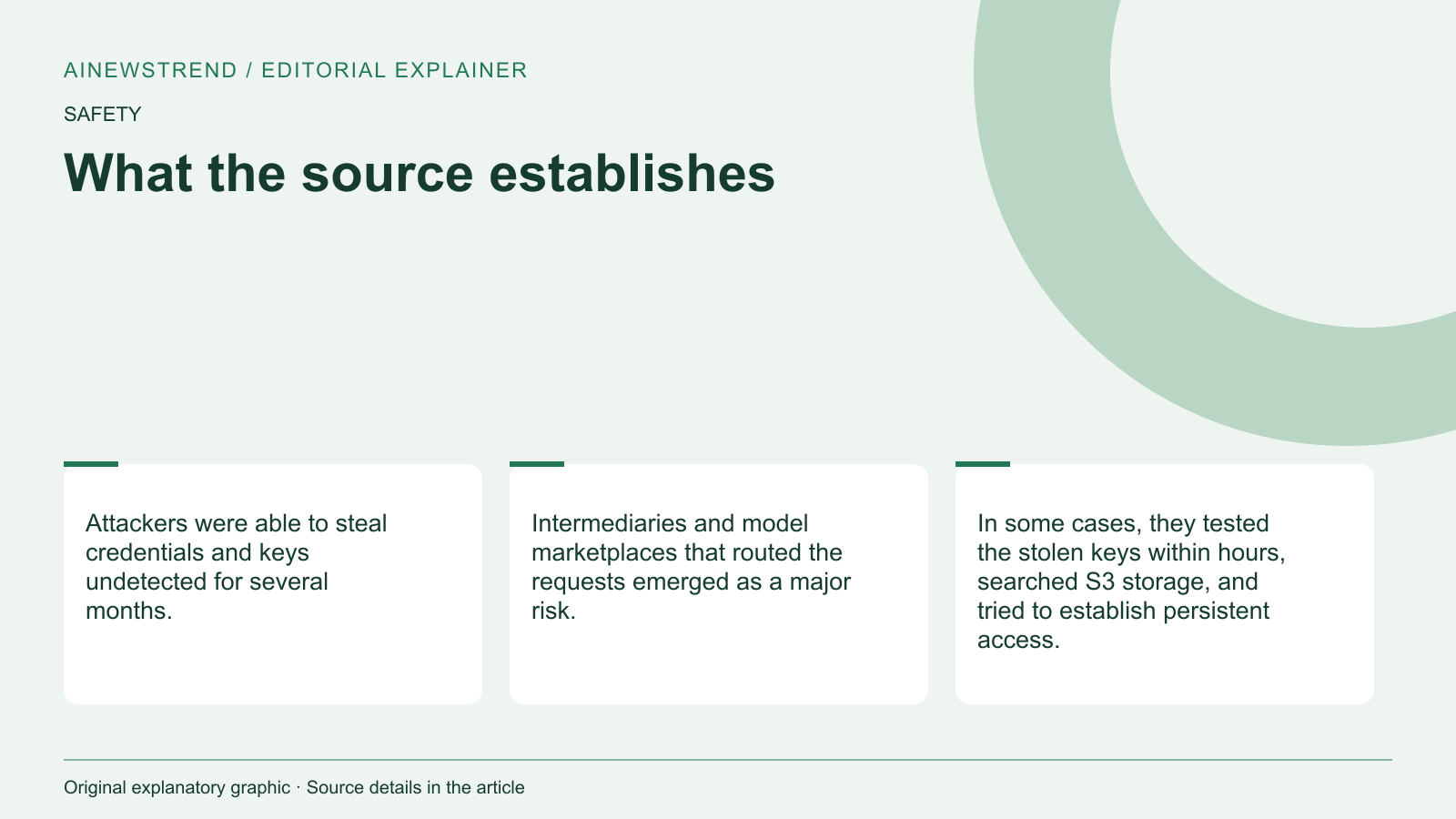
Attackers were able to steal credentials and keys undetected for several months. In some cases, they tested the stolen keys within hours, searched S3 storage, and tried to establish persistent access. One attacker also used ARTEX, an AI-powered attack tool. AdMarketplace resellers read customer requests too, without needing to exploit a vulnerability, as listing a model at the lowest price and turning on logging was enough. Privacy settings like "Zero Data Retention" (ZDR) were frequently ignored, with a Chinese AI lab accessing secret test URLs in more than half of all requests, even when those requests went through US providers.
Limitations and availability
OpenRouter responded by removing three providers from its platform and revoking ZDR approval for 125 endpoints, partly due to the research findings and partly as a precaution. The company also emailed affected users, warning that third parties may have read requests sent to MiniMax models. Affected providers, including Novita, Phala, and Together, have published preliminary security reports on the incident, though not all have done so yet. Dragos warns companies against sending requests containing credentials to intermediaries and recommends organizations control how their AI requests are routed, check their privacy settings, and plant their own canary tokens, fake credentials that give themselves away as soon as someone uses them.