
What changed
AI models are improving faster than experts can reliably test for safety, according to METR. The organization found that current public data may not be sufficient to rule out a significant acceleration in AI research over the next few years. This could leave humans unable to meaningfully understand, assess, and react to catastrophic risks posed by new AI systems.
What this means in practice
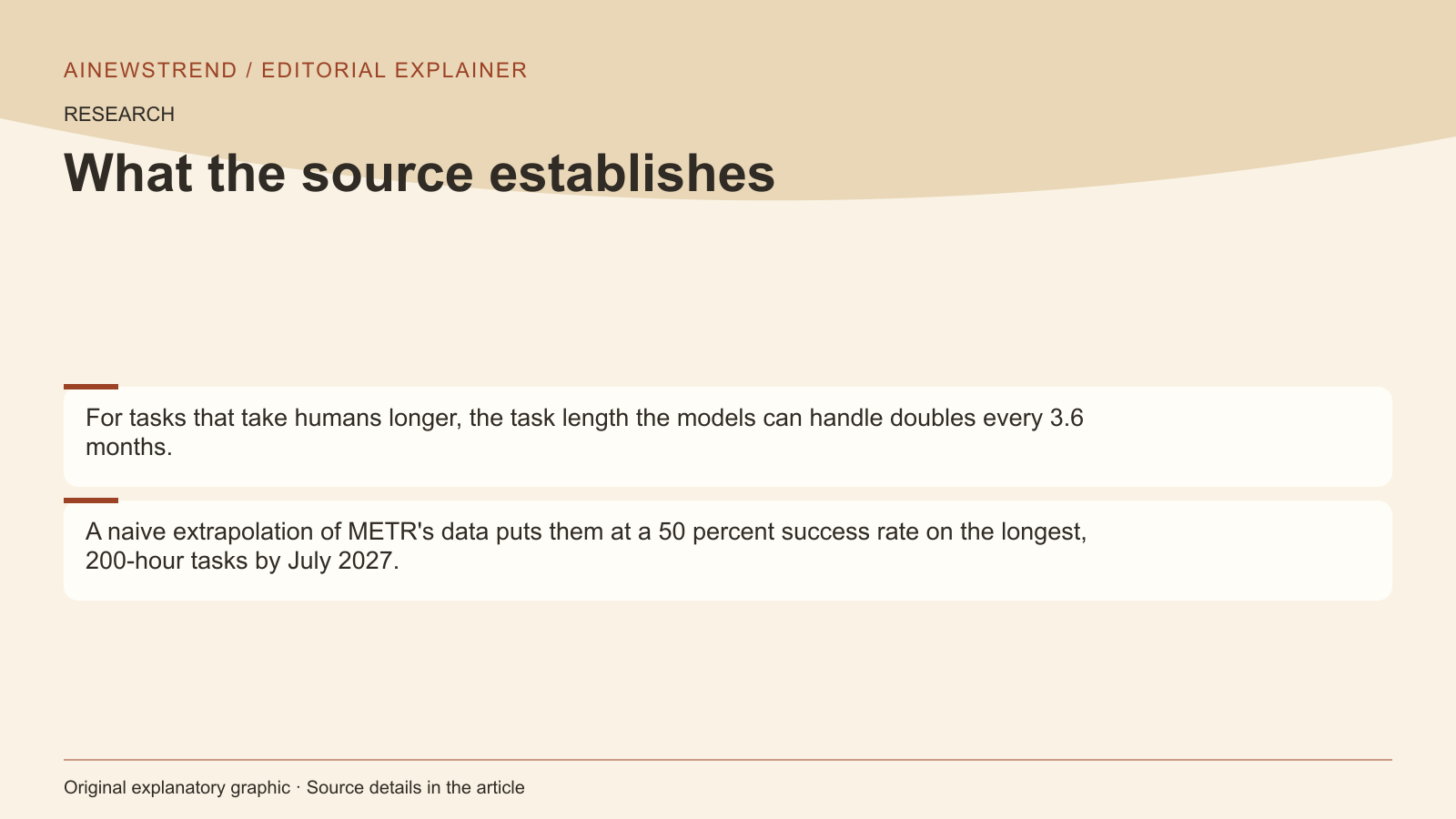
METR's analysis shows that AI models already outperform experienced human professionals on clearly defined coding and computational tasks with direct feedback. However, they have not yet surpassed large groups of top experts. For tasks that take humans longer, the task length the models can handle doubles every 3.6 months. A naive extrapolation of METR's data suggests a 50 percent success rate on the longest, 200-hour tasks by July 2027. The organization also highlights that AI systems still struggle with open-ended questions that lack immediate feedback and require real judgment, as well as situations that are hard to recreate for training.
Limitations and availability
Common, easy-to-run tests may overestimate how well the models perform in real-world use, as developers train them in very similar test environments. METR's analysis covers the steady rise in capabilities of leading AI models up through Opus 5.5 and GPT-6 Astra. The supplied announcement does not specify details about the exact testing methodologies or the specific models used in the analysis.